The best time to visit Costa Rica is December to April if you want dry weather on the Pacific. May to November is the green season: greener forest, fewer people, and rain that usually waits until afternoon. There is no cold season. Elevation changes the temperature more than the month does. The Caribbean does not use the Pacific calendar.
December to April, if the plan is a Pacific beach. January through March is the sunniest stretch, and also the busiest. December is already dry, and the forest is still green from the rains that just ended. Christmas week and Easter week fill the beach towns even inside that dry stretch. Book the room before you book the flight if those are your dates.
May, June, and November are the easier months if you can put a hike or a surf lesson in the morning and you want fewer people. July often brings a short drier break on the Pacific, the veranillo, but it does not always come. September and October are the wettest months on the Pacific. If those are your dates and you want sun, look at the Caribbean instead.
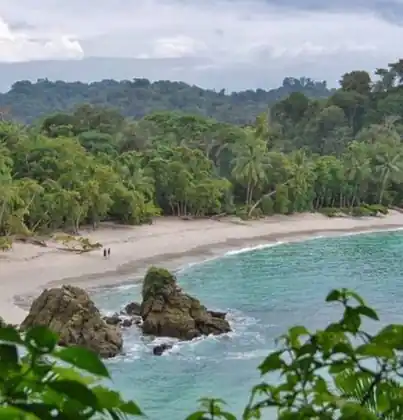
December to April on the Pacific. Many of those beach days pass with no rain at all. By March the dry northwest, around Tamarindo and Papagayo, has turned brown. The Southern Pacific, including the Osa Peninsula, stays wetter and has a shorter dry window. Do not expect a Tamarindo week and a Corcovado week to feel like the same month.
This is also the season for boat days along the far north. The Central Valley is pleasant then too, with warm days and nights that cool off. A light layer is enough after dark.
May to November on the Pacific. People here also call it the green season. A normal day is predictable. The morning is often clear. Clouds build over the mountains, and the rain, when it comes, is a hard shower rather than a full day of drizzle. Hikes, park gates, and surf lessons belong before lunch.
September and October are the wettest, and often the quietest, with the lowest room rates. The forest is full. Roads that are dust in March can rut, especially the climb to Monteverde and the dirt into Santa Teresa. Rainfall is about 1,000 to 2,500 mm a year in the Central Valley, and more than 3,800 mm in parts of the Caribbean and the Southern Pacific.
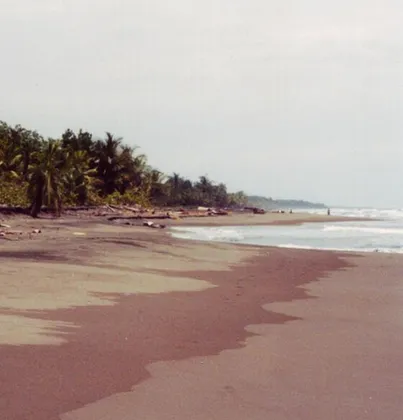
Not the Pacific calendar. Rain can fall in any month. February, March, September, and October are often the more settled weeks around Puerto Viejo and Cahuita. September and October, the wettest months on the Pacific, are often the better window on this coast.
Tortuguero is wetter still. The canals run anyway. A clear morning can still rain by afternoon, so the rain jacket stays in the bag even in a good week. The reef at Cahuita is clearer after a few drier days, not the morning after a hard night of rain.
December to April favors the Pacific. May to November favors greener forest, lower prices, and mornings that still work. Those wetter months also bring the south swells that reach Santa Teresa, Dominical, and Pavones. The two oceans do not peak together.
The Central Valley is usable in every month. Nights are cool, and the rain still prefers the afternoon. If the dates are fixed, pick the coast to match them. If the coast is fixed, pick the month. Surf spots matches a wave to a month.
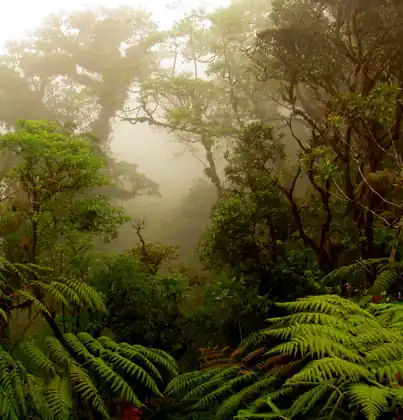
The Central Valley, including San José, Alajuela, and Atenas, usually sits around 18–26°C. A light jacket is enough at night. Pacific and Caribbean beaches commonly reach 28–32°C, and they do not cool off much after dark. Monteverde is cooler and misty in every month. Chirripó, the highest peak, can drop near freezing at night. The summit is not a day trip from the valley.
Elevation changes the day more than the month does. A plan that mixes a beach and the cloud forest needs both a swimsuit and a layer. What to put in the bag is in what to pack.
December is already dry on the Pacific, and the forest is still green. January and February are the sunniest months on that coast, and the busiest. March stays dry, and the northwest has turned brown. April is the last reliable dry month. The first rains can show up late in April.
May opens the rainy season. June is wetter, and the mornings are often still clear. July can bring the veranillo, and it does not always come. August goes back to afternoon showers. September and October are the wettest months on the Pacific, and often a better window on the Caribbean. November is still wet. December dries the Pacific again.
A direct hit is rare. In more than 170 years of records, one hurricane has made landfall: Otto, in November 2016, at the northern border with Nicaragua. It did not come ashore at Tamarindo, Manuel Antonio, or Puerto Viejo. Costa Rica sits near 8 to 11 degrees north, south of the usual tracks, and too close to the equator for most storms to hold together. Storms that form off Mexico move west, away from this Pacific coast.
The risk that does show up is rain. From June through November, a storm that stays north of the country can still dump water on it. Nate, in October 2017, never made landfall here. The damage was floods, landslides, closed roads, and bridges out. That can happen in the Central Valley and on either slope, not only on the Caribbean.
For a Pacific beach week, a named storm is not a reason to cancel. For a boat, it is. Tortuguero is reached by water, and a rough sea moves or cancels that ride. Puerto Viejo still has the road, and the surf gets bigger. Watch the Caribbean from August to October if the week depends on a boat. Change the boat day. Do not cancel Guanacaste for a storm that is staying north.