Leatherback turtles nest on the Pacific from October to February, at Playa Grande. Green turtles nest at Tortuguero from June to October. Humpbacks are offshore at Uvita in two seasons, December to April and July to November. Sloths are a morning of looking up. Quetzals, if they are around, are at the Monteverde gate when it opens.
Leatherbacks nest on Playa Grande, in Las Baulas, from October to February, but very few come now: 2 to 8 females a season. There are no turtle tours, as of Oct 2026. In those months, keep lights and flash off the sand. It is not a noon swim in any month. A boat crosses the estuary from Tamarindo, or you drive around.
Green turtles nest at Tortuguero from June to October. Do not expect them on the beach in March. The canals still run in every month: monkeys, birds, and caimans are the daytime boat, and that boat does not depend on a nesting night. You stay overnight. There is no road in.
Olive ridleys come ashore in a mass at Ostional, north of Nosara, all year, about once or twice a month, and only with a local guide. The road up is slow and dirt. Leave in the morning if you are driving it. A mass nesting is not guaranteed. If the night is quiet, you do not get a second chance by walking the beach on your own.
Uvita, in Marino Ballena National Park, is the place people mean. Humpbacks are offshore in two seasons: from December to April, coming from the north, and from July to November, coming from the south. The boat leaves in the morning, from Uvita or from Dominical, before the wind puts a chop on the water. A sighting is not guaranteed. A calm morning is the better chance.
The sandbar shaped like a whale tail exists only at low tide. Pay at the ranger hut and walk it in the morning. At high water there is no path out. The sandbar is a walk. The whales are the boat. They are not the same outing.
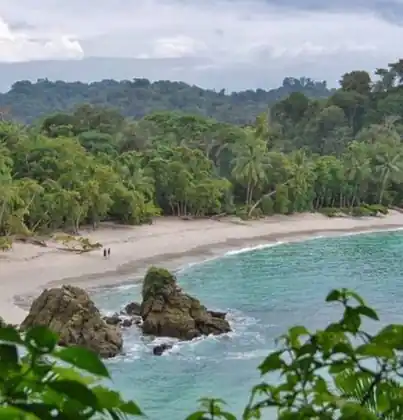
Sloths are in the trees, not on a schedule. Manuel Antonio is the easy place to look up, in the first hour, before the trail is crowded. Look into the canopy and the cecropia, and walk slower than the group ahead of you. The Cahuita trail, which starts in town, is the other easy look, on a morning that is not pouring. Do not expect one because you paid the gate.
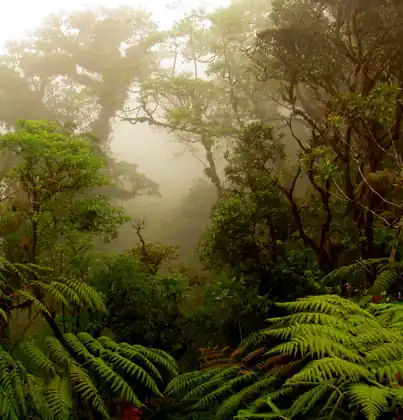
Quetzals, when they are around, show early in the Monteverde cloud forest. They are easier to find in the first half of the year, when they nest, and you still have to be there at opening. By midmorning there is a line, and the bird has usually moved. Mist is normal. It is not a reason to sleep in. Bring a layer. The reserve is cool even when the beach you left was hot.
Scarlet macaws are the early hour at Carara, the forest north of Jacó, past the bridge. Stay on the trail. Midday the forest is hot and the birds have moved. Howler monkeys are the dawn call in almost every forest town in this guide. You hear them before you see them.
On a nesting beach, yes. The guide sets where you stand, and the lights stay off the sand. That rule is the same in Tortuguero. Ostional is the same rule, with a local guide, not a walk from the parking lot. Corcovado also requires a guide, from Drake Bay or Puerto Jiménez. The parks are in national parks.
For sloths, a morning walk in Manuel Antonio or on the Cahuita trail is enough to look up on your own. A guide helps you see more. The guide is not what makes the animal appear. Go early either way. Dolphins in the Golfo Dulce are a morning boat from Golfito or Puerto Jiménez, not a sighting from the dock. The months for turtles and whales are in the best time to visit.