- Corcovado National ParkA guide is required. You enter by boat or the long track from Carate. Leave at first light. Stay on the trail, and do not start after lunch.
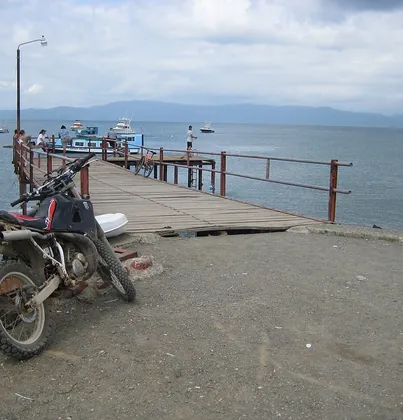
- Drake BayThe bay is a boat landing more than a drive. Swim only when the water in front of the village is calm. The park, not the street, is why you came.
- Puerto JiménezThe gulf town is a working dock. Walk it and ask what leaves in the morning. The park is not on that street. Looking does not book you.
- Sirena ranger stationThe station is inside the park. You reach it with a guide, by boat or a long beach walk. It is a hard day, or a night there, not a roadside view.
- Golfo DulceCalm gulf water lines the east side, with dolphins. Open Pacific is the other coast. Take a morning boat, before the breeze puts a chop on it.
- Caño IslandSnorkel boats leave Drake in the morning, and you cannot stay on it. From the gulf side that is not a short hop. Do not add it on after lunch.
- Matapalo surfSurf at the tip is a long rough drive, not a beginner reform. Travel while you can see. The road, more than the paddle, eats the clock.
- Dolphin toursMorning boats work the gulf or the outside coast. You may not see them. Stay on the boat if you do. Do not swim after them.
- Scarlet macaw trailsScarlet macaws move at first light along the forest edge. Walk then. By late morning they sit quiet, and a look from the car misses them.
- Night jungle walkGo with a guide after dark, in closed shoes. Frogs and insects are the point, the things a daytime boat never shows. It is not a stroll on sand.
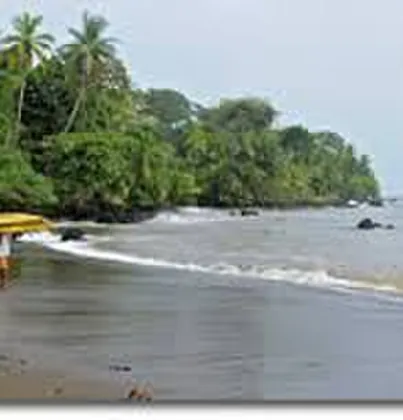
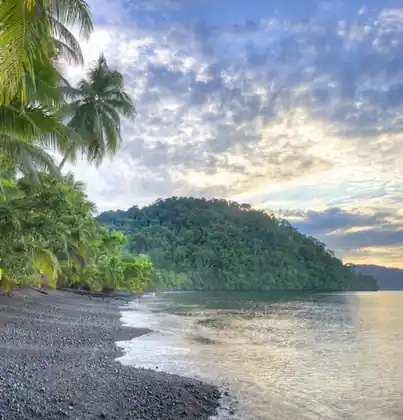
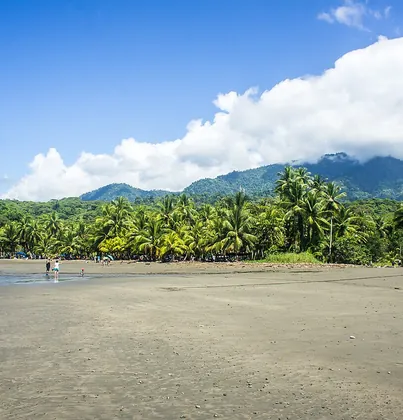
The landscape is rainforest, wild beaches, and Golfo Dulce. You are likely to see scarlet macaws, spider monkeys, tapirs, toucans and dolphins in the gulf. The plants around them are primary rainforest, orchids, giant trees and mangrove.
Around the Osa, macaws and spider monkeys are a morning inside the forest, with a guide. Dolphins are on the gulf, not from the road. Do not expect a tapir on a beach walk.
Corcovado National Park, Caño Island Biological Reserve and groups such as Osa Conservation protect the last Pacific rainforest.
In Osa Peninsula, stay on the trail and do not feed what you came to see. That is the rule that keeps this place the way it is.
The climate is tropical rainforest. It is hot and humid. Rain falls most of the year, heaviest from August to November. A shorter dry spell from January to March. Osa Peninsula rises from sea level to 745 m (2,440 ft).
In the greener months the morning is still usable, and the rain tends to wait until afternoon. The countrywide calendar is in the best time to visit Costa Rica.
By road, leave Juan Santamaría in Alajuela and drive south to the Golfo Dulce. Golfito has a small airstrip. Drake Bay is reached by boat or a short flight.
The drive is simple until the last kilometers. Arrive in daylight if you do not know the road. Buses, shuttles, and rental cars are compared in getting around Costa Rica.