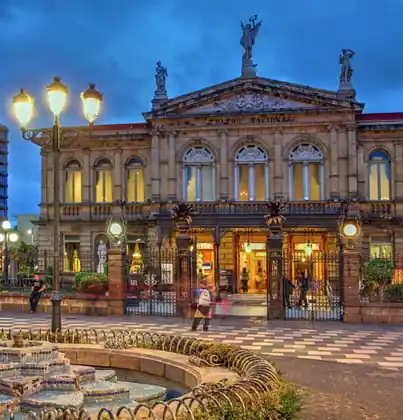
Costa Rica has no standing army. That has been true since 1948. Voters elect a president and 57 deputies for four years. The capital and the assembly sit in San José. A visitor mostly meets the result: civilian police, a public school, and a ranger at a park gate.
No. The army was abolished after the 1948 civil war. The 1949 constitution points that money at education, health, and the courts. There has been no break in civilian rule since. You will not see soldiers on the street, at the airport, or on a beach.
What you do see is the Fuerza Pública, the civilian police, and Tránsito, the traffic police. A checkpoint on a highway is ordinary. It is not a sign that something is wrong. Officers may ask for a license and the car papers. Have them ready. The investigation police, the OIJ, are who you call if something is stolen. How to keep a bag and a car from becoming that call is in is Costa Rica safe?.
A presidential republic. The president and two vice presidents are elected together and serve one four-year term. They cannot run again immediately. Laws are made by a single chamber, the Legislative Assembly, with 57 deputies. There is no senate. The Supreme Elections Tribunal runs the vote, and it is independent of the party in power.
Provinces are not states. They do not elect a governor the way a traveler might expect. Towns elect a mayor. The province line on a map is an administrative boundary, which is why it often fails to match a beach trip. That map is in the provinces guide.
Presidents often govern with a divided assembly, so a law can take time. It rarely changes the week you are there. Schools, clinics, and park rangers are the part of the state a visitor actually uses.
General elections fall on the first Sunday of February, every four years. If no presidential candidate wins 40 percent, a runoff follows about two months later, usually in April. Campaigns are public and colorful, then they end. Flags and rallies are mostly in the Central Valley. They come down after the vote.
On election Sunday, alcohol sales stop. Some shops close. Beach towns notice less of this than San José does. A trip that week still runs. It is a Sunday with more flags and a quieter bar, not a reason to change the dates.
Sometimes, and almost always in the valley. Marches in San José can slow one road for a day, including the road between the city and the airport in Alajuela. They rarely reach a beach in Guanacaste, the Central Pacific, or Limón.
If a march is announced, do not plan a same-day flight that depends on crossing San José at that hour. Leave earlier, or wait it out in Alajuela. A blocked highway is a morning problem. It is not the story of a beach week. How long those drives take on a normal day is in getting around.
A pharmacy, a clinic, the police, and a park ranger. Farmacias are in almost every town and can advise on ordinary stomach, allergy, and pain problems. For anything more, use a private clinic in the valley or in a beach town. The public clinics are for residents in the national health system. A visitor is not turned away in an emergency, and a private clinic is the faster door.
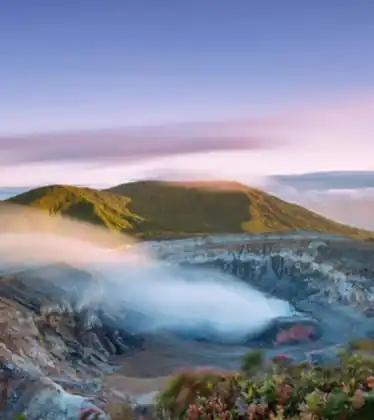
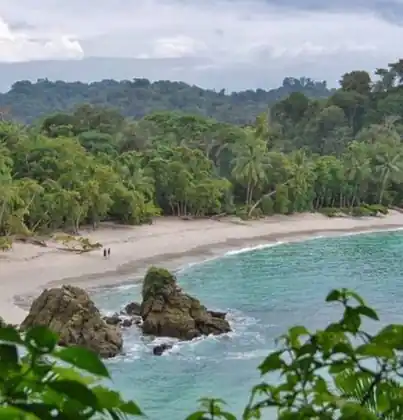
Park gates are staffed. The ranger takes the fee and sets the hours. That is the state you meet at Manuel Antonio or Poás. The emergency number is 911. For how people talk about schools, clinics, and the way a day works, see the ticos.