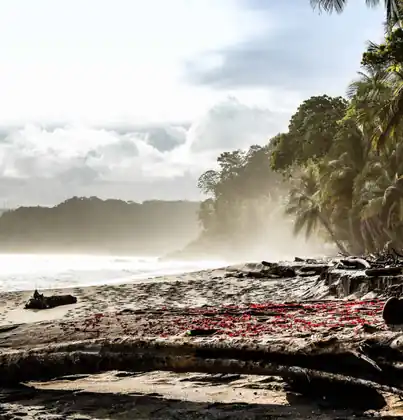
- Playa Jacó: Gray sand, a shore break, and no shade by noon. Swim in the morning, then walk. Rips form along this town beach, so the inside is not flat water.
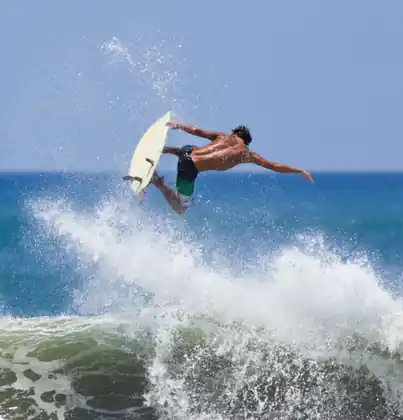
- Jacó surf peaks: Lessons stay in the whitewater. Outside peaks are faster, and they get messy after the sea breeze arrives. This is not a bay you can float in.
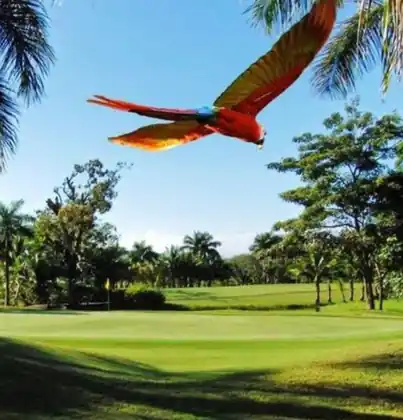
- Carara National Park: The park north is scarlet macaws in forest, not a beach with a gate. Be there early. Later the trails are hot, and leaving the path gets you lost.
- Playa Hermosa: Just south, the wave is heavier than the town beach. Stand and read a few sets. If it is closing out, this stop is a look, not your swim.
- Crocodile bridge: On the river bridge north of town you look down at crocodiles. Stay on the span. Do not climb to the bank, and do not throw anything down to them.
- Rainforest aerial tram: The tram is inland, up in the canopy, and the morning cars are cooler. You are not on the sand. Use the morning, before the forest turns steamy.
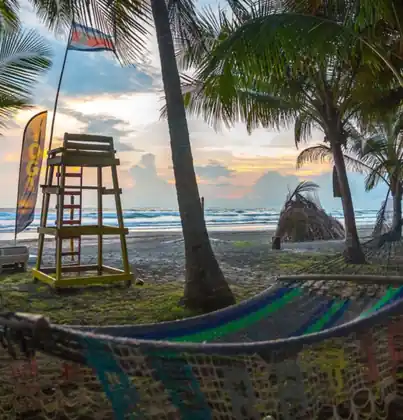
- Beach sunset: The town beach faces west and fills fast. Come early if you want room to sit. The shore break does not turn off for the evening.
- Jacó estuary: The river mouth at the north end is current and birds. Walk the bank. Do not swim where the brown water meets the surf. That mix is not a beach.
- Manuel Antonio day trip: South of here the park limits how many people enter each day. A late start from town can miss the gate. Go early, and do not drive after dark.
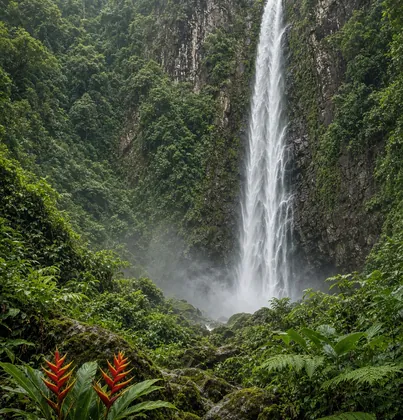
- Bijagual waterfall: The tall fall is in the hills at Bijagual, not a walk from the sand. The trail is steep and slick. Go in the morning and climb out before the heat.
For breaks and seasons, see Surf in Costa Rica.
The landscape is beach town, bay, and coastal hills. You are likely to see scarlet macaws, howler monkeys, crocodiles at the Tárcoles bridge, pelicans and iguanas. The plants around them are palms, beach almond and lowland rainforest toward Carara.
Around Jacó, macaws are a morning north of town, toward Carara, not on the main sand. Crocodiles are under the highway bridge. The town beach at noon is people.
Carara National Park, Tárcoles crocodile-viewing rules, and macaw nest-box work in the nearby forest.
In Jacó, nesting beaches need low lights and a guide who follows the rules. On the trails, stay on the marked path.
The climate is tropical wet. It is hot, about 25–32°C. A shorter dry season from December to April. Heavy rain from May to November. Jacó sits at sea level.
In the greener months the morning is still usable, and the rain tends to wait until afternoon. The countrywide calendar is in the best time to visit Costa Rica.
Most people start at Juan Santamaría in Alajuela and continue by car. From the Central Valley, add time for the mountain roads.
The drive is simple until the last kilometers. Arrive in daylight if you do not know the road. Buses, shuttles, and rental cars are compared in getting around Costa Rica.