Guanacaste is the dry northwest, and it is the name people use for that beach trip. It includes the Liberia airport and most of the Nicoya Peninsula. The south tip of the peninsula is Puntarenas, which is the line a lot of trip plans get wrong. The beach pages call this the North Pacific.
Where Guanacaste is
The capital of the province is Liberia. Guanacaste is the northwest, from the Nicaragua border down the Pacific into the middle of Nicoya. The south tip of the peninsula is Puntarenas. That is the line a lot of trip plans get wrong.
On this site the beaches are the North Pacific. The north shore of Lake Arenal, at Nuevo Arenal, is Guanacaste. The La Fortuna side is Alajuela. The line is the water, not the drive around it. From December to April the hills go brown. That dry look is the province people picture.
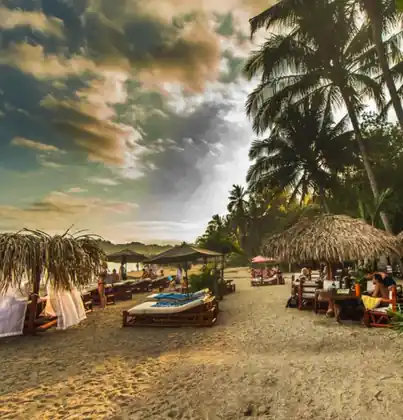
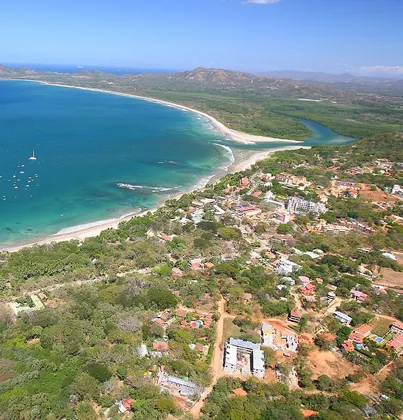
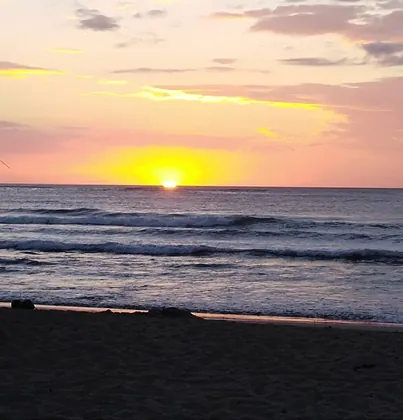
Tamarindo sits on the sand. Evenings fill the beach for sunset.
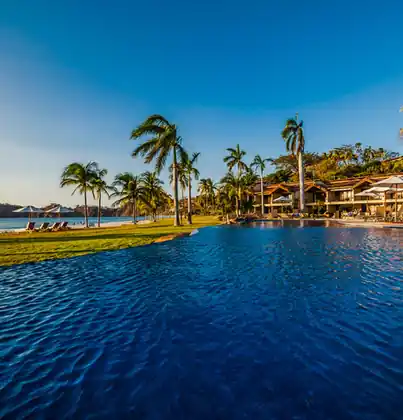
Papagayo has calm bays on a resort peninsula, about half an hour from the Liberia airport.
Sámara is a small beach town with a dirt main street and calm water for a swim.
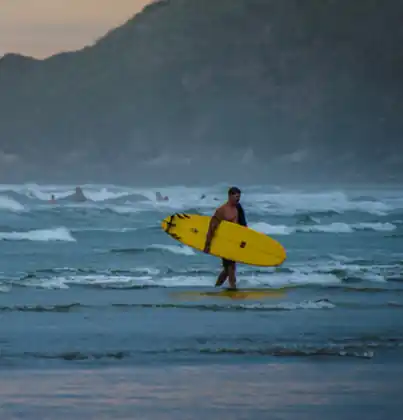
Nosara has Guiones as the long surf beach. Pelada, just north, is the sheltered place to swim.
Playa Flamingo is a Blue Flag beach, with the marina below and houses on the hill.
Playa Langosta has rocky points and sandy coves just south of Tamarindo.
Playa Grande is the long beach north of Tamarindo, where leatherbacks nest.
Playa Avellanas is a surf beach south of Tamarindo, with forest behind the sand.
Playa Potrero is a small fishing bay, 45 minutes from Liberia.
Playa Conchal has a beach of crushed shell, and the golf course sits on the hill above it.
Playa Hermosa is a calm bay near Playas del Coco, half an hour from Liberia.
Playas del Coco is a working beach town, with a fishing fleet, dive boats, and gray sand.
Playa Ocotal is a quiet bay south of Playas del Coco, used more for diving.
Playa Guiones is the long surf beach at Nosara, with forest behind the sand.
Nuevo Arenal is the north shore of Lake Arenal, with the volcano across the water.
Getting around
Fly into Daniel Oduber in Liberia (LIR). Tamarindo, Flamingo, and Papagayo are about an hour. Sámara and Nosara are two or three, and the last stretch is slower than the highway. Route 1 is the Interamericana to Liberia.
The other international airport is Juan Santamaría (SJO), in Alajuela. Use that one when the plan also includes the Central Valley or the south Pacific. A Liberia arrival does not help a Manuel Antonio week. An SJO arrival does not help a Tamarindo week unless you want a long drive on the day you land. From the Central Valley the road crosses mountains, so the drive takes longer than the map says.
Parks and protected areas
These national parks are in Guanacaste: Santa Rosa, Guanacaste, Rincón de la Vieja Volcano, Miravalles Volcano, Tenorio Volcano (part), Palo Verde, Barra Honda, Diriá, and Las Baulas.
Guanacaste province is the northwest, from the Nicaragua border down the Pacific into the middle of Nicoya. Tamarindo, Sámara, Nosara, Flamingo, and Papagayo are in it. Playas del Coco, Ocotal, Potrero, Conchal, Avellanas, and Playa Grande are in it too. The rest of the beach towns on this site are listed on this page.
December to April the hills go brown. That dry look is the province people picture. The north shore of Lake Arenal, at Nuevo Arenal, is also Guanacaste. La Fortuna, across the water, is not.
Fly into Daniel Oduber in Liberia (LIR) for Guanacaste province. Tamarindo, Flamingo, and Papagayo are about an hour. Sámara and Nosara are two or three, and the last stretch is slower than the highway. Juan Santamaría, in Alajuela, is the other international airport. Use that one when the plan also includes the Central Valley or the south Pacific.
A Liberia arrival does not help a Manuel Antonio week. An SJO arrival does not help a Tamarindo week unless you want a long drive on the day you land. Pick the airport for the coast you are actually sleeping on.
The best time to visit Guanacaste province is December to April, the long dry season. The sea breeze fills in by afternoon, and the morning is the flat hour for a swim. May to November is greener and cheaper, with a heavy shower most afternoons and sun around it.
The weather guide has the month-by-month version, including the fact that this dry season is not the Caribbean's. A December week booked for Tamarindo can be a wet week in Puerto Viejo.
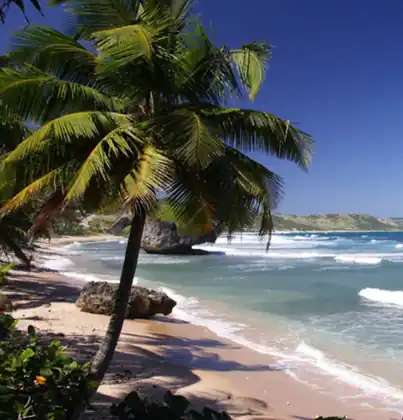
The beaches in Guanacaste province include Tamarindo, Flamingo, Papagayo, Nosara, Guiones, and Sámara. Tamarindo is the town beach, with lessons and a sunset crowd. Flamingo and Papagayo are the calmer bays to the north. Nosara and Guiones are the long surf beach, and Pelada, just beside them, is the sheltered swim. Sámara is the gentler bay farther south. Playa Grande, across the estuary from Tamarindo, is the leatherback beach from October to February, at night, with a guide.
Read a set before you swim. Several of these look mild and still dump on the sand once the breeze is up. The morning is the useful hour on almost all of them.
No. Santa Teresa, Malpais, Montezuma, and Tambor are the south tip of Nicoya, and that tip is Puntarenas. People still call the whole peninsula Guanacaste. The ferry that reaches them leaves from the city of Puntarenas, not from Liberia.
Monteverde is Puntarenas too. The cloud forest is not this dry province, even when the road you drove came from this side.
The local attractions in Guanacaste province, aside from the beaches, are Rincón de la Vieja, Palo Verde, Las Baulas, Bahía Culebra, and Ostional.
- Rincón de la Vieja: Dry forest, steam, and mud pots, a day from Liberia. Go early. The trails get hot, and you stay on the marked path.
- Palo Verde: Wetlands on the Tempisque, birds more than a beach. A boat is the useful hour. Midday on the open trail is hard sun.
- Las Baulas: Leatherbacks use Playa Grande from October to February. The visit is at night, with a guide, and lights stay off the sand.
- Bahía Culebra: The sheltered bay at Papagayo. You can stay in the water until the afternoon wind puts a chop on it. Morning is the smooth hour.
- Ostional: Olive ridleys arrive in a mass, mostly at night, and only with a local guide. The refuge is a slow road north of Nosara. Do not expect one on a daytime walk.