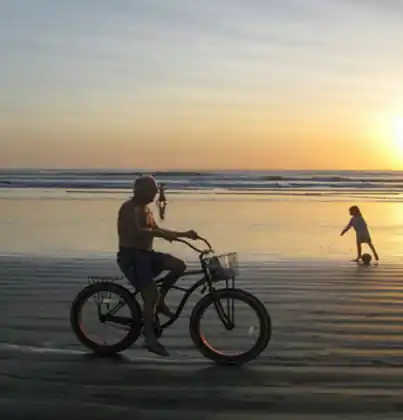
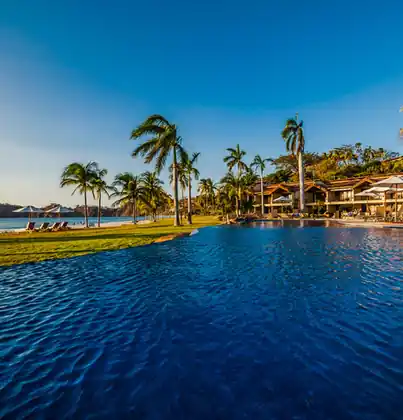
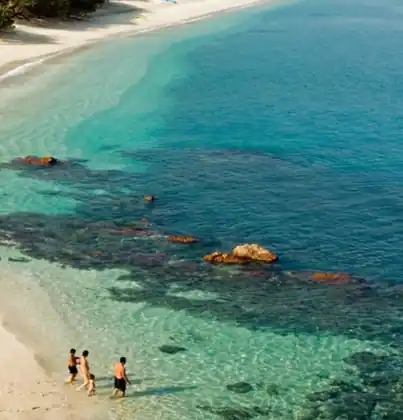
- Playa del CocoGray sand, the fleet pulled up on it, and almost no shade by noon. It is a town beach. It is not a green cove, so do the swim in the morning.
- Fishing fleetThe boats sit on the sand in town. You can watch them come and go. This is not a trip out to an island. Ask if you want tomorrow's departure.
- Playa OcotalThe quiet dark cove just south, better water for a mask, a short ride. Morning is when it is clear. This town beach is the fleet, not the dive.
- Playa Hermosa de CocoA calm bay just north, and not the heavy surf beach south of Jaco that shares the name. Swim it in the morning. The wind is what roughs it up.
- Catalina IslandsA boat, not a shore snorkel. They leave ahead of the wind. Ask the night before, bring water, and do not try to swim out from the sand.
- Bahía CulebraThe sheltered bay on the peninsula, north of town. You are not in a shore break. Access is often through a gate. Morning is the flat water.
- Congo trailCongo means howler. Walk the trail slowly in the morning and look up. By noon the heat has emptied the dry forest. Stay on the path.
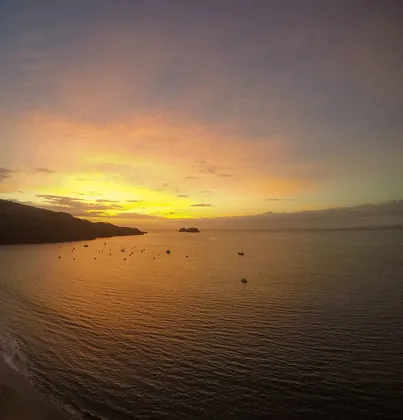
- Main-beach sunsetPeople stand on the gray sand for the sunset. Come a little early if you want to sit. The fleet pulled up on the beach is part of the view.
- Snorkeling covesRocky coves south of town, not the gray main sand. The mask is a morning tool. Later the wind turns the water milky and you are guessing.
- Witch's Rock day tripA boat day north to the rock and the beach beside it. Start in the morning. There is nothing to buy out there, and the ride back meets the wind.
The landscape is beach town, bay, and dry forest. You are likely to see howler monkeys, white-faced capuchins, magpie jays, iguanas and coatis. The plants around them are tropical dry forest of guanacaste, pochote and beach almond, with mangrove in the estuaries.
Around Playas del Coco, howlers are in the dry forest behind town at first light. The beach at noon is the fleet and the heat, not a wildlife walk. Reef fish are a boat to the Catalinas.
Reef codes on the dive sites and Catalina Islands, with the Guanacaste Conservation Area as the dry-forest buffer inland.
In Playas del Coco, stay on the trail and do not feed what you came to see. That is the rule that keeps this place the way it is.
The climate is tropical dry. It is hot, about 28–33°C. Little rain falls from December to April. Afternoon showers fall from May to November. Playas del Coco sits at sea level.
In the greener months the morning is still usable, and the rain tends to wait until afternoon. The countrywide calendar is in the best time to visit Costa Rica.
The nearest airport is Daniel Oduber in Liberia. Juan Santamaría in Alajuela is the other option. From the Central Valley the road crosses mountains, so the drive takes longer than the map says.
The drive is simple until the last kilometers. Arrive in daylight if you do not know the road. Buses, shuttles, and rental cars are compared in getting around Costa Rica.