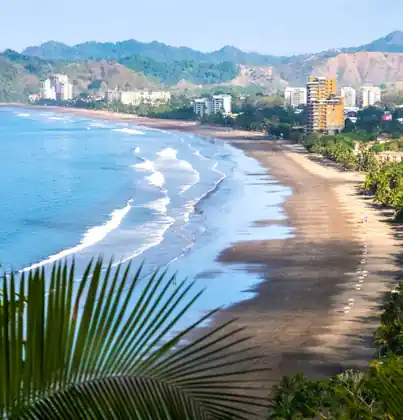
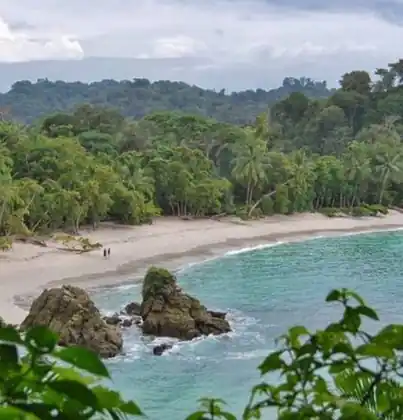
- Playa Esterillos EsteThe east end is a long open beach, palms behind the sand, and a shore break that can dump. Swim only when sets look small. Noon shade is patchy.
- Playa Esterillos OesteThe west end is quieter and closer to a river mouth. That mouth has a current, so keep any swim away from it. This is open Pacific, not a bay.
- Esterillos CentroThe middle is where the village road meets the sand. Same long beach, same shore break. Walk early, while the almond trees still throw shade.
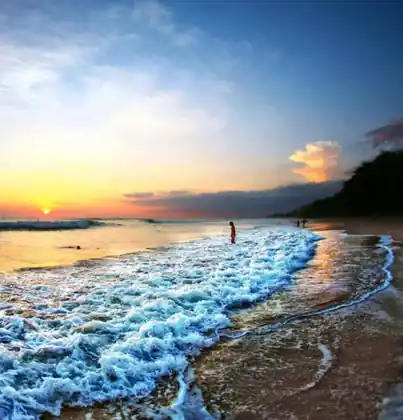
- Long-beach sunsetThe beach runs west, so the sun drops into the water in front of you. Come early enough to sit. Carry a light for the walk back along the sand.
- Jaco day tripTown is a short highway run north, louder and more built up than this beach. Use the cool hours. Drive back while you can still see the road.
- Carara National ParkMacaw forest is north, past the busy town and the river bridge. Trails get hot fast. Go at opening, stay on the path, and do not expect a beach.
- Tide poolsRock along the beach holds pools only at low tide. High water covers them. Wear shoes, and stay off the ledge when surf is washing over it.
- Beach horsebackIf you ride, go while the sand is still firm. Midday heat is hard on the horse and on you. A ride is not a reason to ignore the wave.
- Manuel Antonio day tripThe park south of Quepos caps how many people enter each day. Start early or you can miss the gate. Keep the drive back in daylight.
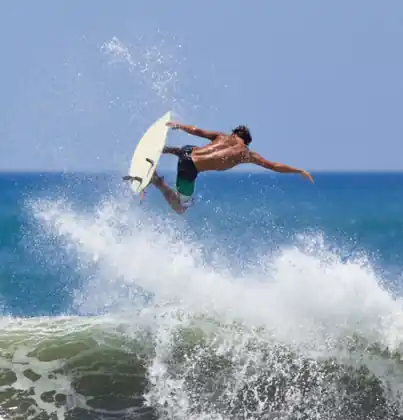
- Surf peaksSeveral peaks run along this beach, and they do not all break the same way. Watch from the sand first. A heavy closeout is not a place to learn.
For breaks and seasons, see best surf spots in Costa Rica.
The landscape is long beach, palms, and low coastal plain. You are likely to see scarlet macaws, howler monkeys, pelicans, iguanas and shorebirds. The plants around them are coconut palm, beach almond and moist-forest trees behind the long beach.
Around Esterillos, macaws pass over the palms at first light, on the way toward Carara. Pelicans work the shore through the morning. By noon the long beach is sun, not birds.
Local nest watches on the quiet shore, with Carara National Park guarding the scarlet macaw flyway to the north.
In Esterillos, nesting beaches need low lights and a guide who follows the rules. On the trails, stay on the marked path.
The climate is tropical wet. It is hot, about 25–32°C. A shorter dry season from December to April. Heavy rain from May to November. Esterillos sits at sea level.
In the greener months the morning is still usable, and the rain tends to wait until afternoon. The countrywide calendar is in the best time to visit Costa Rica.
Most people start at Juan Santamaría in Alajuela and continue by car. From the Central Valley, add time for the mountain roads.
The drive is simple until the last kilometers. Arrive in daylight if you do not know the road. Buses, shuttles, and rental cars are compared in getting around Costa Rica.