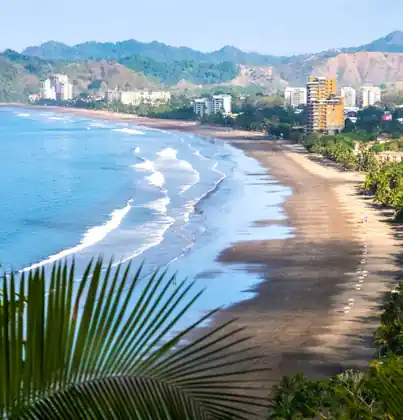
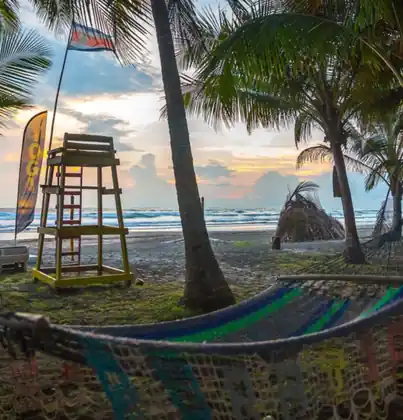
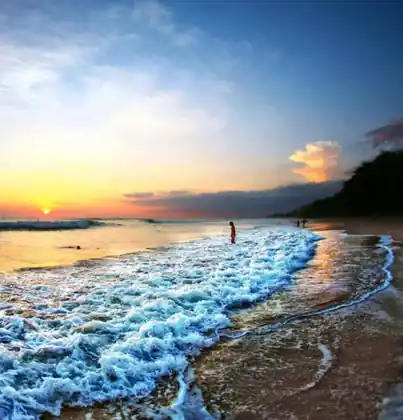
- Playa Hermosa surfThis is a heavy beach break, the kind contests use, and it dumps. The outside is not a first lesson. Look early, before the breeze bumps it.
- Beach breaksPeaks shift along the sand. One end can be closing out while another is cleaner. Watch for a while. Do not paddle out because someone nearby did.
- Hermosa estuaryThe river mouth is birds and moving water, not a second beach. Stay on the bank. A river mouth on this coast is the wrong place to wade.
- Playa JacóThe town beach is a short ride north, busier, with a milder shore break than here. Swim it in the cool morning. By noon that shade is almost gone.
- Carara National ParkMacaw forest sits north, past town and the bridge. It is worth the first hour, not midday. Stay on the trail. Nothing inside the gate is a swim.
- Scarlet macaw trailsScarlet macaws cross at first light, between forest and the trees behind the beach. A late start sees an empty sky. Keep your eyes above the road.
- Sunset surf checkWalk the sand in the last light and read the sets. A pretty sky does not make this wave smaller. If it is dumping, look. Do not paddle.
- Beach horsebackHorses use the morning, while the sand is firm and the tide is not washing the track. Midday is too hot for it. Do not ride into the shore break.
- Hermosa turtlesNesting is seasonal and after dark, with a guide and no lights. In daylight you are looking for tracks in the sand, not a turtle on the beach.
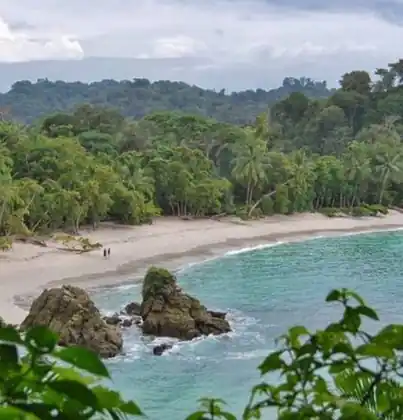
- Manuel Antonio day tripThe park is a long ride south, and the gate caps daily entries. It will not fit after a surf check. Leave early, and keep the drive in daylight.
For breaks and seasons, see best surf spots in Costa Rica.
The landscape is dark-sand beach, surf, and coastal forest. You are likely to see scarlet macaws from Carara, howler monkeys, crocodiles in nearby rivers, pelicans and iguanas. The plants around them are beach almond, palms and moist lowland forest.
Around Playa Hermosa, macaws from Carara pass at first light, usually north of the beach. Crocodiles stay in the rivers, not in the surf. The sand itself is waves and pelicans.
Olive ridley nest patrols on Hermosa, and Carara National Park protecting the macaw forest next door.
In Playa Hermosa, nesting beaches need low lights and a guide who follows the rules. On the trails, stay on the marked path.
The climate is tropical wet. It is hot, about 25–32°C. A shorter dry season from December to April. Heavy rain from May to November. Playa Hermosa de Jacó sits at sea level.
In the greener months the morning is still usable, and the rain tends to wait until afternoon. The countrywide calendar is in the best time to visit Costa Rica.
Most people start at Juan Santamaría in Alajuela and continue by car. From the Central Valley, add time for the mountain roads.
The drive is simple until the last kilometers. Arrive in daylight if you do not know the road. Buses, shuttles, and rental cars are compared in getting around Costa Rica.